
Deceleration Load and ACWR

From Mechanical Cost to Match Week Monitoring in Football Introduction In season load monitoring, most teams track familiar external load variables such as total distance, high speed running, sprint distance, and accelerations. Increasingly, however, decelerations are emerging as a particularly informative signal, not because they reflect “more running,” but because they represent a distinct mechanical […]
Criterion Validity and Reliability of Velocity – Based Training Devices: Which One to Choose?

Introduction The beneficial effects of resistance training on muscular strength, power, and hypertrophy are well documented (Suchomel, Nimphius & Stone, 2016). Monitoring interventions seems important to achieve desired physiological adaptations. Given that, most common form of determining training intensity is percentage-based on estimated 1RM (repetition maximum). The problem of the method itself lies in the […]
Football Has Changed, So Must Our Training

Modern elite football has evolved into a faster, tighter, and more explosive game than ever before. The tempo has increased, player density has shifted centrally, and high-intensity actions now play a decisive role in transitions, chance creation, defending space, and winning duels. Yet, many coaches still evaluate performance using metrics that barely scratch the surface. […]
Can We Have a Load Day During In-Season?

Yes, But Only If It Makes Sense For the last two years I’ve been teaching at the Croatian Football Federation on UEFA licensing with football and fitness coaches, and honestly, this is the part I enjoy the most. When you sit with coaches who are in the trenches every day, dealing with real players, real […]
The Heart as the Engine of Endurance

So you decide to take it on a run and your wish is to line up for a 10K. Your success isn’t only determined by the legs, it’s written in the rhythm of the heart. The way the heart beats, adapts, and recovers reflects the entire story of endurance performance. Heart rate (HR) (Figure 1) […]
Development of Aerobic Endurance During the Competitive Period

Good physical conditioning of a football team is reflected in the players’ ability to perform all technical and tactical tasks at an optimal intensity throughout the entire match (90–120 minutes). In moments of physical or mental fatigue, proper conditioning allows the player to continue demonstrating technical and tactical skills — and matches are often decided […]
Hamstring Injuries in Youth Football Players

Causes As young athletes are increasingly exposed to high training volumes and intensities, injury incidence has risen. In some sports, injury rates in youth players have even surpassed those of professionals. Hamstring injuries affect athletes worldwide and account for around 10% of all injuries in field-based sports. Among the most affected are youth football players. […]
Association Between Running Performance and Match Effectiveness in Football

Insights from Modrić et al. (2019) Introduction Soccer is a complex, dynamic sport that requires a combination of technical skill, tactical awareness, and physical performance. Each position on the field imposes unique demands, from central defenders reacting rapidly to offensive transitions to wide midfielders covering long distances at high speeds. Over the past decade, the […]
Comparing Croatian Second League CMJ Profiles to Premier League Standards Using the CI–EBI Quadrant Model
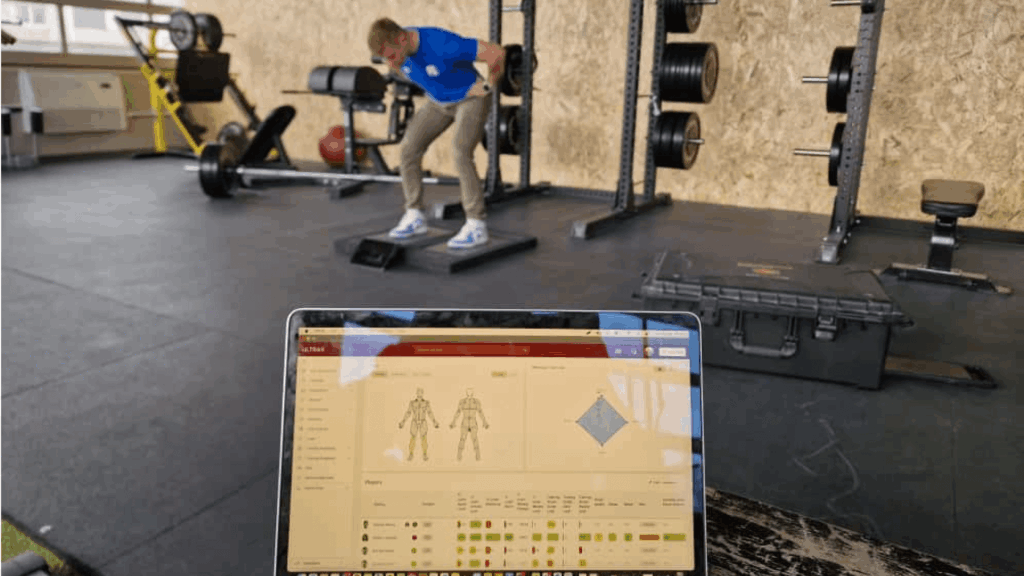
Introduction: Why Jumps Tell a Bigger Story In football, explosive power and braking ability are two of the most decisive qualities a player can possess. Whether it’s a winger exploding past a defender or a midfielder slamming the brakes to stop a counterattack, these movements rely heavily on neuromuscular qualities. The countermovement jump (CMJ) has […]
Unveiling the Physiological, Neural, and Neuromuscular Foundations of Deceleration

Introduction: The Underrated Skill That Wins Games In the world of high-performance sport, we often praise speed, power, and explosiveness. But what if the true game-changer isn’t how fast an athlete moves, but how well they stop? Deceleration, defined as the ability to reduce speed efficiently and safely, is a crucial yet often overlooked element […]
